


“Trauma is not caused by the event itself, but rather develops by the failure of the body, mind, spirit and nervous system to process extreme adverse events”
Has Trauma become a Buzzword?
Inflation
Are we using the word trauma too casually these days? Sometimes it seems as though everyone is traumatized.
Other terms related to psychological suffering (e.g., abuse, boundary violations, bullying, narcissism, toxic leadership) are also used liberally in the workplace and, as a result, risk losing their meaning.
The harmful effect of this is that those who have truly been deeply wounded by overwhelming experiences may feel that their suffering is not being taken seriously.
Thanks to the growing number of books on trauma and the popularity of authors such as Gabor Maté, individual trauma has become relatively familiar to the general public.
(I am sometimes surprised that participants in training programs, for example, know what the "Window of Tolerance" is and how they can regulate themselves through breathing.)
Types of Trauma
The most widely recognized form is acute or shock trauma (Trauma with a capital T). This refers to a single, overwhelming event that exceeds your normal coping mechanisms. Your life trajectory is abruptly and forcefully interrupted (e.g., a natural disaster, car accident, or rape).
Research and literature emphasize the physiological imprint that overwhelming experiences leave on our bodies. After such an event, the body remains in survival mode. Life energy becomes frozen.
Less well known is trauma with a small t. This results from the accumulation of difficult-to-bear experiences. These are chronic stressors that persist over time (e.g., neglect, subtle bullying, toxic management styles, ongoing conflicts, microaggressions). This form of trauma is less visible but can be just as destructive as shock trauma.
Today, there is also growing attention to developmental and attachment trauma. These are the wounds sustained during childhood due to a lack of safety, support, or attention (Complex PTSD).
(And then there are also collective trauma, systemic trauma resulting from structural discrimination and threat, and intergenerational trauma.)
"How do I teach my body that the fight-flight response is for life threatening situations and not for answering an email?"
Traumatic Responses Are More Common Than we realize
Reactive behavioral patterns often reveal when people are operating in survival mode. This stress-driven, threat-based behavior on “autopilot” tends to be repetitive.
People who have been wounded in the past are more likely to become triggered again later in life. Their response to a situation may then be disproportionate and no longer aligned with the reality of what is happening. This also occurs in the workplace.
Protect
Most people are familiar with the fight-or-flight response in dangerous situations. The body becomes mobilized (hyperarousal). This may look like speeding up, wanting to fix things immediately, agitation, emotional outbursts, intensity, aggression, or storming off. In this state of the nervous system, there is a sense that “I can do something” ("I can").
When someone perceives (!) a situation as life-threatening, the body may shift into the next protective system: freeze. This can manifest as immobilization, collapse, mental disengagement, giving up, numbness, disappearing, or shutting down (hypoarousal).
In these physiological states of protection, we are unable to connect with others. The social engagement system of the nervous system is effectively offline. What dominates here is a sense of incapacity ("I can't").
Less widely known but very common (my practice is full of it!) is the fawn response: people-pleasing behavior, adapting yourself to others, being easy-going, not daring to say no, and not expressing your own needs.
This survival response is activated when you are trying to avoid danger, fear conflict, or ensure that you stay out of trouble. Afterwards, this response often leads to significant feelings of shame and frustration.
In my work with conflict, everyone is, by definition, operating in a "protect" mode.
Connect
In a safe environment, the nervous system resides in what is known as the ventral vagal state (Porges): a condition of inner calm, mindful presence, and relative ease.
In this regulated state, you feel connected to others, remain curious, can listen attentively, and show empathy. You are able to think clearly, generate creative solutions, and act consciously.
When we are under stress, the body responds before the rational mind can catch up. The prefrontal cortex (your rational thinking capacity) only joins the process later.
“Trauma, in essence, is all about overwhelm and broken connections. (…)
Trauma can result from shock,
and also from a series of painful and difficult experiences which can be cumulative over time.”
Trauma in the Workplace
Organizations can also experience different forms of trauma.
Some examples:
- A team is in a shut down after a series of aggressive incidents that created prolonged feelings of fear and overwhelm. “The team is burned out.”
- A manager is in shock after being anonymously accused of “inappropriate behavior.” He has no idea what the accusation refers to, and whenever he asks questions, he encounters resistance and silence. He is now on sick leave.
- A department is characterized by deep distrust following several events that shocked its members. The incidents are never openly discussed, and the atmosphere remains heavy and subdued.
- An escalated conflict remains unresolved and continues to repeat itself stubbornly.
Individual Trauma in Organizations
Many people become triggered in their professional environment when tension and perceived threat increase. Something “old” is touched.
Reactive behavior in the workplace is contagious. Before long, emotions run high and situations become deadlocked. Often, you can sense the suppressed energy beneath the surface that has no safe outlet.
When individual employees are operating in survival mode, the consequences may include:
- Reduced capacity to cope with everyday stressors (e.g., having a “short fuse”)
- Reactivity whenever tension increases (e.g., shutting down, people-pleasing, excessive anger)
- Pressure on the person's well-being, quality of life, and relationships
- A lack of perceived choice or control
- Being trapped in repetitive patterns of unproductive or destructive behavior
- Defensive behavior being mistaken for someone's “personality” or “character” (e.g., “she's a drama queen” or “he's narcissistic”)
Wounded Collectives
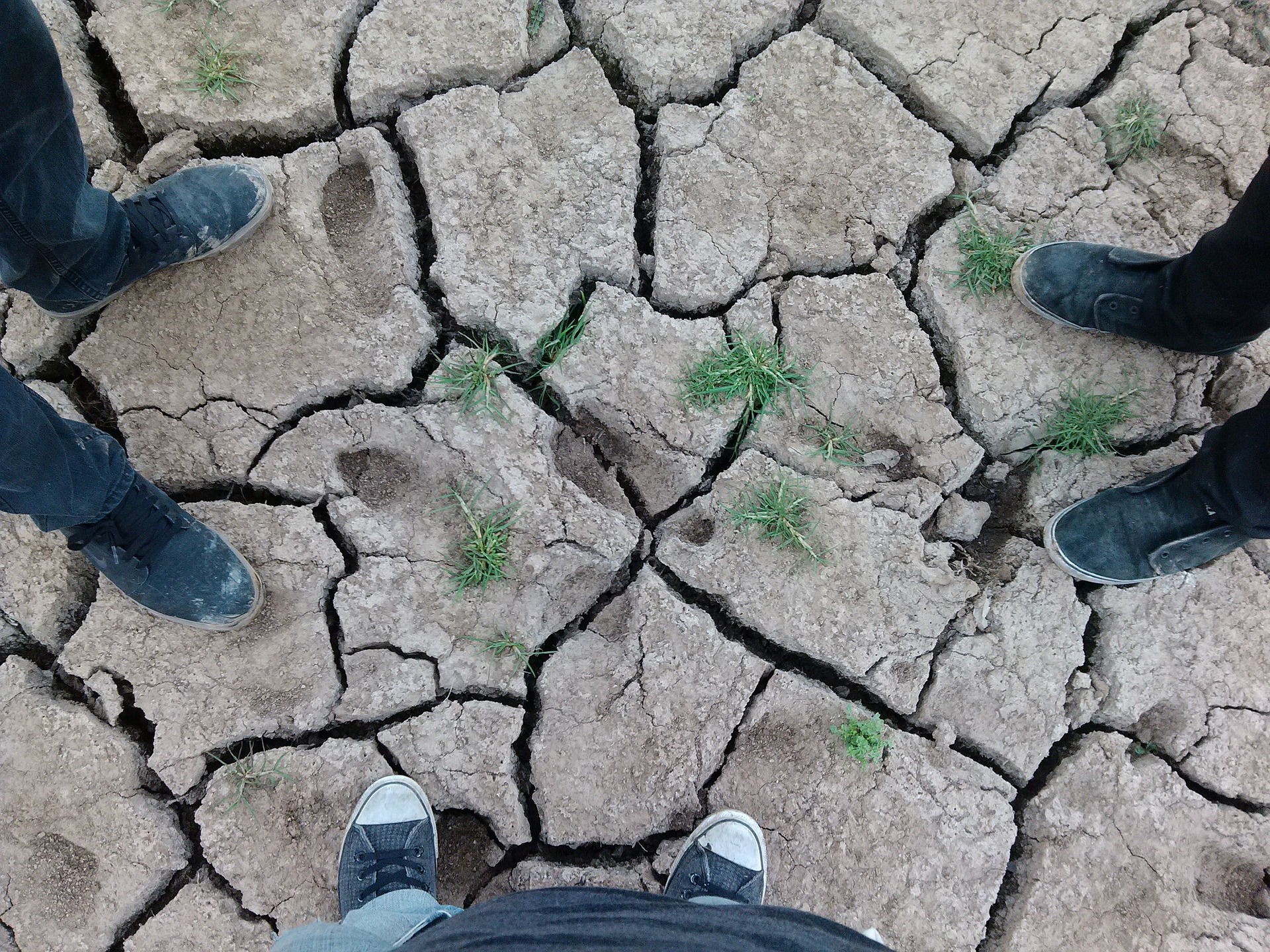
Groups can also become stuck. Collaboration no longer flows. People hold back, remain silent, argue, look away, seek distraction, withdraw, sabotage efforts, fall ill, or escalate tensions.
In collective trauma, a group of people or an entire system is connected through an overwhelming experience (e.g., a painful incident or prolonged toxic leadership).
As long as trauma dynamics remain unacknowledged, they will continue to reappear in an attempt to gain attention and create space for healing. Situations repeat themselves over and over, leaving little room for change.
The consequences of unaddressed trauma include:
- Isolation: the feeling of carrying it alone
- Fragmentation: the breakdown of relationships
- Distancing: people increasingly disconnect from one another
This raises an important question: How can we restore broken connections, and what is required to do so?
“Trauma breaks relation.
Within a person, trauma fractures relation to the self and sabotages connection to the other.
At the scale of the collective, traumatic disrelation is cultural and generational; it is a feedback loop. (…)
Only by addressing unresolved past suffering can we work effectively to prevent potential future suffering. A collective trauma requires a collective response.”
What do organizations need?
A Trauma-Sensitive Approach
Organizations often seem primarily focused on “solving” problematic situations. Workplace issues are frequently addressed at the individual level (e.g., sanctions, coaching, remediation programs).
Procedures and tools can make it easy to remain disconnected. In this way, we avoid talking to one another. Difficult topics are sidestepped, and meaningful dialogue is avoided.
When relationships have been damaged and people have been hurt, the goal is not simply to “solve” something. Rather, it is about healing wounds, repairing relationships, and integrating difficult experiences.
Creating "Raumzeit"
A trauma-sensitive approach focuses on creating a sufficiently safe environment for dialogue.
Recovery and healing become possible when people are given the opportunity to:
- Share their experiences and speak openly
- Make sense of what has happened to them
- Integrate painful experiences
- Learn from adversity
The work I do is grounded in the power of post-traumatic growth. This may involve learning how to set boundaries, building a culture of openness together, or strengthening conflict-management skills.
Are you stuck, curious and open to have a conversation?
Sign up for a free conversation!
“When we become burdened by the stories we tell ourselves about the past, we cannot show up fully in the present; we can’t bring our most essential energy into our work or relationships. (…)
Unhealed trauma damages our capacities for presence and embodiment and harms our ability to relate and connect with others in a healthy way.”
Only by addressing unresolved past suffering can we work effectively to prevent potential future suffering.
A collective trauma requires a collective response.”
Sources of Inspiration
Max de Moor, October 28, 2022, De Standaard
The Polyvagal Theory by Stephen Porges and Deb Dana
I am currently involved in an intensive two-year training program on personal, intergenerational, and collective trauma with Thomas Hübl. It is a profound journey, both professionally and personally.
Copyright © 2026 Silvia Prins. All rights reserved. Articles or excerpts may be published elsewhere only when accompanied by the copyright notice and the name of the website. Thank you for informing me when doing so.