

WHAT IS HEALING?
These days, there is a great deal of discussion and writing about trauma. What we hear far less about, however, is the question: what exactly is healing?
What stands in the way of a vital and fulfilling life?
More often than not, it is the patterns we carry, the beliefs we hold, the chronic stress stored in our bodies, and the way we perceive and interpret the world around us that prevent us from truly living life to the fullest.
In this article, I would like to offer an initial exploration of what trauma healing is and what it can bring to your life—both personally and professionally.
One thing is certain: healing is anything but a walk in the park...

As human beings, we tend to pay attention to our trauma responses—and begin the work of healing them—only once we have reached a breaking point and can no longer function the way we are accustomed to. (...)
We mask our trauma responses through overwork, we dissociate from them, or we numb ourselves to their presence.
Sometimes we do not even realize that we are carrying trauma until we begin to see how many of the choices we believe we are making freely are actually trauma responses: why we enter and leave certain relationships or careers, why we struggle with addiction, and even why we are drawn to particular kinds of work or leisure activities.
When we start putting all the pieces together, we discover that we have been carrying around a whole cartload of trauma responses and unmet needs.
Trauma healing is not for the faint-hearted (...).
WHO IS BEHIND THE WHEEL?
FROM AUTOPILOT TO CONSCIOUS CHOICE
Trauma often manifests itself as a feeling of being stuck. You find yourself repeatedly ending up in the same unpleasant situations or dealing with the same seemingly "impossible" people.
Painful experiences that have not yet been fully integrated tend to resurface again and again. These repetitive patterns may show up as failed relationships, recurring conflicts, or repeated experiences of disappointment and failure.
At some point, it is often these frustrating and sometimes bewildering experiences that prompt us to embark on the path of healing—a search for greater awareness, meaningful change, and personal growth.
Along the way, questions such as these often arise:
- How can I more quickly—and more compassionately—recognize old protective reactions that no longer serve me and are no longer needed today?
- Who is actually behind the wheel when I feel stressed, threatened, or cornered?
- How can I create more space between what happens and how I respond, so that I can act with greater awareness and intention?
A healing journey is, by definition, a journey of change. And change is often deeply confronting. It also requires time, patience, and a great deal of energy.
You may discover, for example, that always being accommodating and easy-going in relationships does not necessarily lead to a fulfilling partnership or lasting friendships.
Or perhaps you begin to realize that constantly taking care of everyone else leaves you depleted—and that the question, “What do I actually want?” is not an easy one to answer.
Many of us spend years—sometimes decades—living on autopilot, operating from the same flawed assumptions until life confronts us with a reality that can no longer be ignored.
Such a breaking point is often accompanied by a health crisis and one or more life events that force us to wake up—experiences such as infidelity, divorce, the death of a loved one, miscarriage, the loss of a child, or the loss of a job.
These moments can be deeply painful, yet they often mark the beginning of a profound reckoning with ourselves and the life we have been living.
LIVING IN THE PRESENT
FROM REPETITION TO NEW EXPERIENCES
Trauma from the past places a filter over our perception. We do not see things as they are; we see them through the lens of what we have experienced.
As a result, anger may feel threatening. You may freeze when someone gets too close. You might react defensively at the slightest sign of resistance, or feel abandoned when a loved one forgets to call you on your birthday.

An old and familiar protective response is being activated in the present, even though it is disproportionate to the reality of the situation.
Through healing, you can gradually learn to experience what is actually happening here and now. In other words, you begin updating your information about a person or situation because new information can finally come in. You become embodied and present instead of being trapped in the past.
As Thomas Hübl so beautifully describes it, it is as if a door opens within your psyche. The light entering this new room begins to inform what you want to do or say. Your response is no longer determined by what was stored in the old room or dictated by an old survival pattern.
You gain the ability to choose more consciously and respond rather than react. Less often are you pulled into automatic, unconscious, and impulsive behaviours driven by a need for protection. As a result, you remain connected—to yourself and to others.
THE RIVER OF LIFE
FROM BLOCKAGE TO FLOW
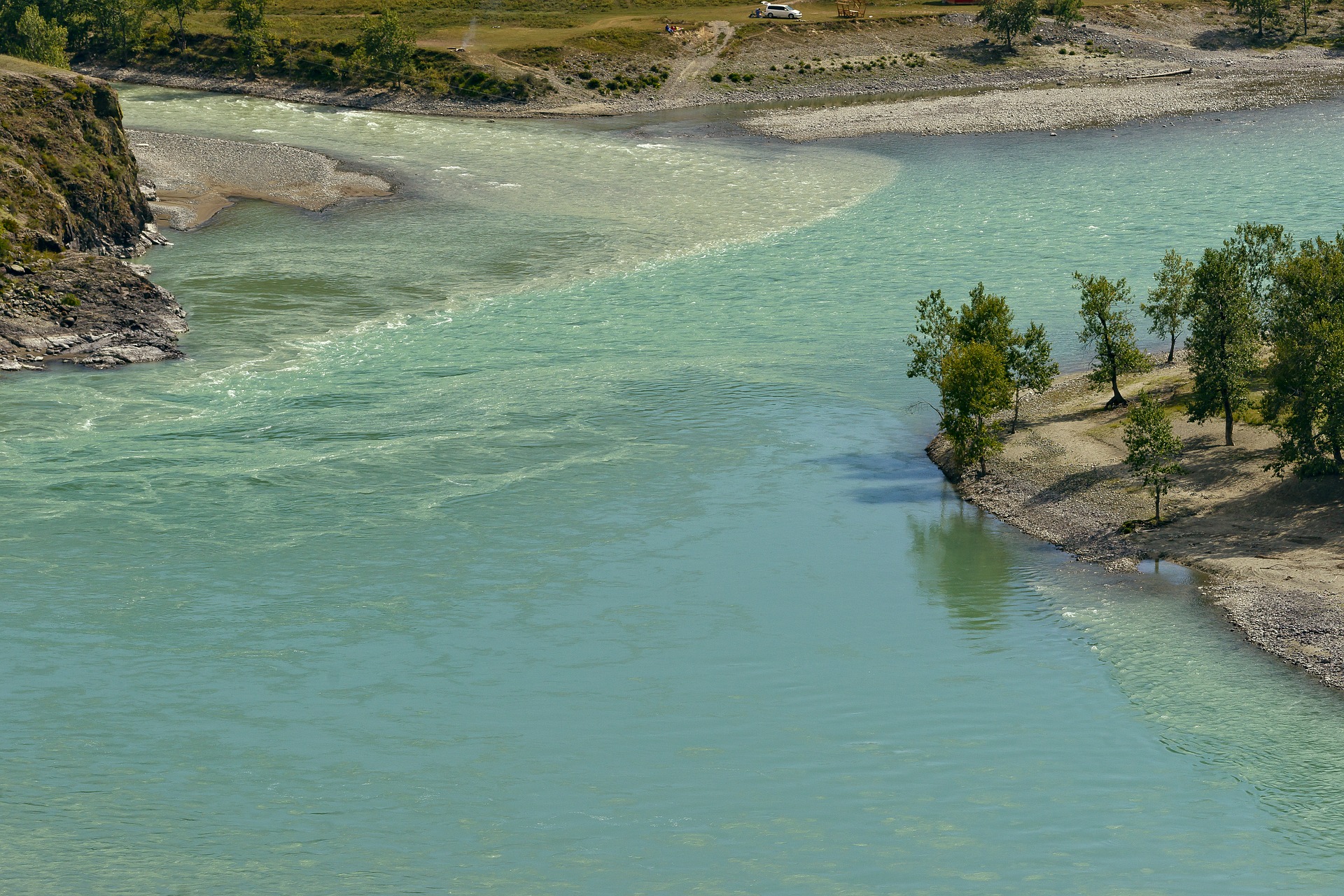
Trauma is like having large boulders obstructing the river of your life. The water can no longer flow freely. Often, we do not even notice this until a crisis forces us to pay attention.
The purpose of trauma healing is not to remove those boulders as quickly as possible through sheer willpower.
In fact, those very obstacles are the way.
Impatient or frustrated statements such as, “I just want this to go away!” or “Why don’t I feel happy and free yet?” are, in themselves, symptoms of trauma.
The journey may not even have truly begun yet—and it may never have a definitive endpoint.
So what does the path of healing look like? It may include steps such as:
- Gently acknowledging and feeling the blockages in your body with curiosity and attention.
- Exploring how these deeply ingrained neurological patterns once served you and what they have also helped you achieve (for example, building a successful career through hard work or developing strong empathy for others).
- Recognizing that these patterns were intelligent responses to situations that once felt overwhelming, frightening, or impossible to navigate.
- Noticing that the past no longer acts as a filter over your perception or hangs over your life like a veil; you are increasingly able to live in the present moment.
- Reconnecting fragmented parts of yourself—for example, the people-pleasing boy who was afraid of his father and the adult man who is now capable of making different choices.
A healing process is ultimately about restoring the natural flow of the river, step by step.
A new inner movement begins to emerge—one that gradually becomes visible in your life and your work.
You can once again—or perhaps for the very first time—surrender to the flow of life.
The obstacle is not IN the way.
The obstacle IS the way.
are you READY?
Are you ready for change and prepared to embark on a healing journey?
You are welcome, exactly as you are.
The practice will be open throughout most of the summer. So there is still time to begin a therapeutic process.
Feel free to get in touch without obligation. Together we can explore what support you may be looking for.
SOURCES OF INSPIRATION
Including:
- The Timeless Wisdom Training, Academy of Inner Science, Thomas Hübl, 2025–2026
- Tending Your Roots: An Earth-Centered Approach to Healing Personal, Ancestral, and Collective Trauma, Mindi Counts, 2024
- Various books and podcasts
Copyright © Silvia Prins (2026). All rights reserved.
This article, or parts thereof, may be reproduced or published elsewhere only with proper attribution to the copyright holder and the website on which it originally appeared. Please notify me if you intend to republish any part of this content.